Prepare Raised Beds for Spring Planting

Spring is the most exciting time for gardeners, but the success of your season starts long before the first seeds go into the soil. Whether you’re working with a balcony, terrace, or full garden, proper preparation of your raised bed is what turns ideas into results.

Start with the Bigger Picture. Planning Your Spring Garden

Before starting any work with the soil, it’s essential to take a step back and plan your garden with intention. Deciding what to grow whether vegetables, herbs, flowers, or a combination, directly influences how your raised beds, such as the Upyard GardenBox, should be prepared and organized.

Different plants have different requirements, so aligning them with your available space is key. A compact balcony may suit herbs, lettuce, or radishes, while a terrace allows for a more diverse mix of edible and decorative plants. In a larger garden, raised beds can support full combinations, including larger crops and layered planting.

Thoughtful planning at this stage helps avoid common issues such as overcrowding, inefficient use of space, or incompatible plant pairings. More importantly, it creates a garden that is easier to maintain and delivers more consistent, satisfying results throughout the season.

Why Raised Beds Are the Best Starting Point for Spring Gardening

A raised bed is one of the most efficient ways to start the gardening season with better control and more predictable results. Compared to traditional ground planting, raised beds allow you to manage soil quality, improve drainage, and start planting earlier, as the soil warms up faster in spring. At the same time, they create a cleaner, more structured garden layout that is easier to maintain throughout the season.

Solutions like the Upyard GardenBox take this further by combining durability with flexibility. Made from Nordic softwood and designed as a modular system, it allows gardeners to build structured raised bed setups that can be expanded and adapted over time supporting both functionality and long-term garden planning.

6 Steps to Prepare Raised Beds for Spring

Preparing your raised beds for spring is essential to ensure healthy plant growth and a productive season. By following these six practical steps, you create the right structure, soil conditions, and support system for your garden to thrive from the very beginning.

1.Clear Old Plants, Weeds, and Debris

Start by removing all leftover plant material from the previous season. Clearing your raised bed ensures that pests and diseases do not carry over and gives your growing space a clean, fresh start for spring planting.

2. Check the Structure of Your Raised Bed

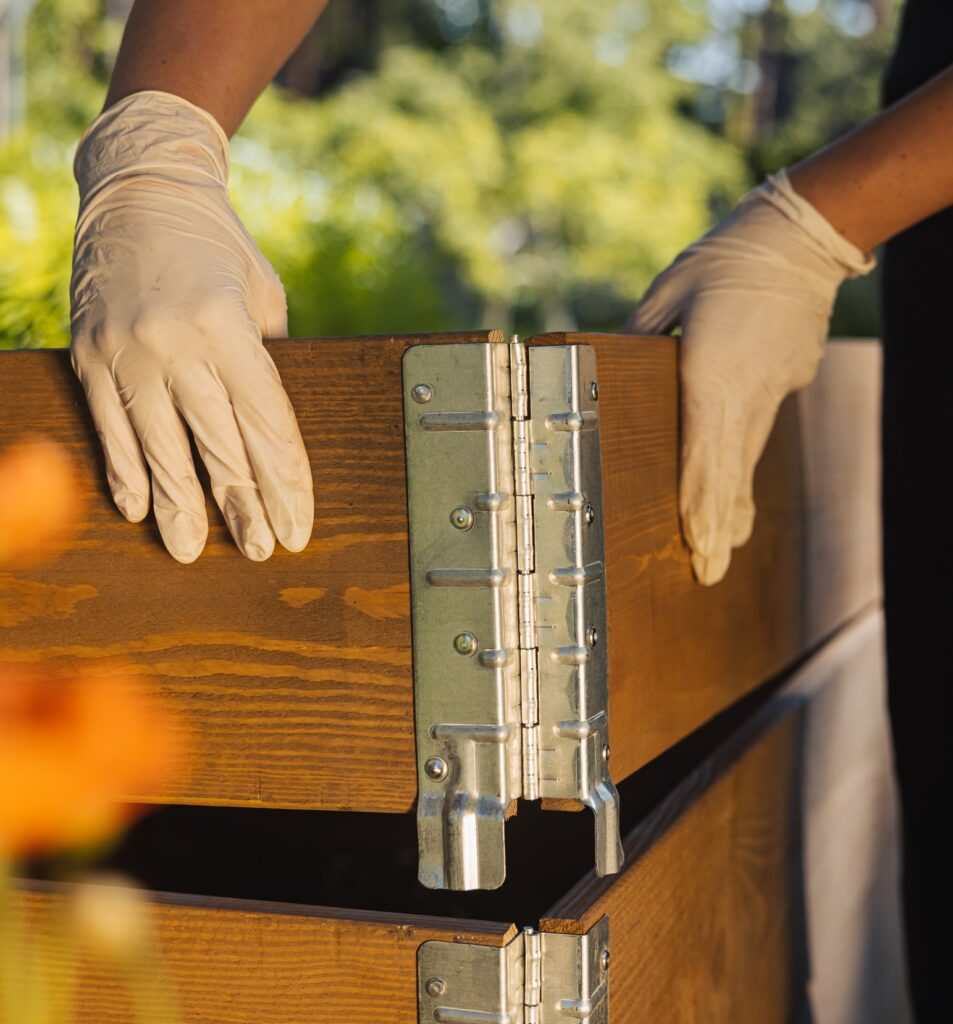
Inspect your raised bed for any signs of wear or damage after winter. Pay attention to corners, joints, and overall stability, and make sure drainage is not blocked. Well-built solutions like the GardenBox Professional are designed for durability, but a quick check ensures your garden remains stable and reliable throughout the season.

3. Refresh and Improve Your Soil

Healthy soil is the foundation of a productive raised bed. Add compost or organic matter to restore nutrients, check soil levels, and top up if needed. Lightly mixing the layers improves soil structure and supports better root development, directly impacting plant growth and yield.

4. Plan Your Plant Layout

Before planting, take time to plan where each crop will go. Consider plant height, sunlight requirements, and spacing to avoid overcrowding. A well-planned layout turns your raised bed into a functional system, where each plant has the right conditions to grow.

5. Install Supports and Accessories Early

Setting up structure at the beginning simplifies the entire season. Install trellises for climbing plants, add covers for early protection, and consider irrigation solutions for consistent moisture. Upyard accessories, such as modular trellis systems and greenhouse covers, integrate seamlessly with raised beds and help create a more controlled growing environment.

6. Mulch and Protect the Soil

Finish by covering the soil with mulch. This helps retain moisture, regulate temperature, and reduce weed growth. Proper mulching not only protects your soil but also makes ongoing garden maintenance significantly easier.

Common Mistakes When Preparing Raised Beds

Even experienced gardeners can overlook essential steps when preparing raised beds, and these small missteps can significantly impact results.

Planting too early — cold soil slows root development and delays growth
Ignoring soil quality — leads to weak plants and lower yields
Lack of structure or planning — creates inefficiencies and ongoing maintenance issues
Overcrowding plants — reduces airflow, increase disease risk, and limits productivity

Avoiding these mistakes ensures your raised bed starts the season with the right foundation, supporting healthier plants and more consistent results.

Start Strong, Grow Smarter

Preparing your raised bed properly is the foundation of a successful gardening season. With the right planning, structure, and tools, your garden becomes easier to manage, more efficient, and significantly more rewarding over time.

With Upyard GardenBox solutions and compatible accessories, you can create a garden that not only performs this spring but continues to evolve season after season. Start strong and let your garden grow with you.

How to differentiate in a crowded market?

Walk through any garden retail space – online or in-store and the pattern is clear: planters, raised beds, and garden structures increasingly look the same.
At Upyard, we believe differentiation doesn’t come from individual products, but from how assortments are built. Our modular, expandable garden systems create clear structure, visible value, and long-term relevance.

Customers Don’t Buy Products.
They Buy Confidence

A planter on its own is just an object. What customers are really buying is confidence – confidence that the product will last beyond one season, that it fits their space whether it’s a small balcony or a larger garden, and that it can adapt as their needs change over time.

When shelves and listings are filled with similar-looking products, that confidence quickly disappears. Too much choice without clear structure creates hesitation. Customers start comparing details that don’t matter, feel unsure about making the “right” choice, and often leave without buying at all. Assortments that perform well avoid this friction by offering clear logic instead of isolated products. They present complete solutions built around real use cases, not just items on display.

This is where the Upyard approach comes in. By designing modular, expandable garden systems with consistent design and clear usage scenarios, Upyard helps retailers turn complexity into clarity. The result is an assortment that builds customer confidence at first glance and converts it into long-term satisfaction and repeat purchases.

Why Consistency Is Powerful

One of the strongest (and most overlooked) sources of differentiation is consistency.

When a range uses the same visual language, clear naming, and simple usage scenarios – balcony, terrace, garden – customers instinctively understand how things fit together. They don’t need to compare endlessly or decode specifications. The assortment feels intuitive and trustworthy.

For retailers, this consistency pays off in very practical ways. Merchandising becomes easier. Category structure is clearer. And brand recognition builds steadily over time, rather than resetting with every new product launch.

From Supplier to Partner:
How Upyard Approaches Assortments

Upyard was developed with this challenge in mind.

Our range is designed as a modular system, not a collection of standalone items. Customers can start with a core product and expand as their needs grow. Durable Nordic softwood construction supports long-term use, while compatible accessories and extensions increase basket value without adding complexity.

For retail partners, this creates flexibility. You can introduce a focused core assortment, expand seasonally, or adapt displays based on local customer behavior all while keeping the logic of the range intact.

Beyond products, we support partners with high-quality visuals and benefit-led product stories designed to work consistently across shelf, e-commerce, and marketing channels. In crowded categories, this coherence is what makes listings stand out even when products appear similar at first glance.

The Strategic Shift That Matters

In saturated garden categories, differentiation doesn’t come from offering more products. It comes from offering better structure.

When customers understand:
– why a product exists
– how it fits their space
– how it can grow with them

Confidence replaces hesitation. Conversion improves. Returns decrease. Loyalty increases.
This shift from selling individual products to building coherent, expandable assortments shapes how Upyard develops its range and supports retail partners in creating garden categories that perform long term.

Winter Seed Sowing: Grow Even in the Cold. Upyard Guide

Winter doesn’t mean the end of gardening it can be the start of your growing season. With the right approach and tools, you can sow cold-tolerant seeds in winter and watch them sprout strong and healthy come spring.

What Is Winter Seed Sowing?

Winter sowing is a method of planting hardy seeds outdoors in small mini-greenhouses during the coldest months (typically January–February). Natural cold exposure (called stratification) wakes up the seeds at the right time and boosts germination. It’s like letting nature do the hard work for you.

5 TOP Benefits for Winter Seed Sowing

  1. Natural stratification – cold exposure helps break seed dormancy and stimulates better germination.

  2. Earlier growth compared to direct sowing – seeds often sprout earlier than those sown directly in garden beds in spring.

  3. Saves indoor space – no need to crowd windowsills or use grow lights.

  4. Stronger, hardier seedlings – plants grow naturally acclimated to outdoor conditions.

  5. Protection from pests and weather – closed containers protect seeds from birds, rodents, wind, and heavy rain.


Upyard Gear That Helps

To make winter sowing easier and more reliable, Upyard offers thoughtfully designed garden accessories that integrate seamlessly with raised beds and modular garden setups. The Greenhouse for Raised Beds with Lockable Lid, made from solid wood and UV-protected polycarbonate, helps create a stable microclimate for seeds and young plants — allowing you to start the growing season earlier while protecting them from cold, wind, and sudden temperature changes.


Ready to Grow?

Winter seed sowing is a simple, low-effort way to kick off your gardening year earlier and with stronger plants. With Upyard accessories, you can protect and manage your seeds with confidence no extra heat or crowded indoor trays needed.

Upyard’s innovations for a better gardening experience

As we enter the dawn of a new season, Upyard is excited to unveil a range of innovative products designed to redefine convenience, style, and sustainability in your gardening journey. We don’t just provide products – we’re your partners in cultivating a thriving outdoor space.

ModernBoxes with Castors: Redefining Convenience

Our ModernBoxes with castors are more than just containers; they are a tailored solution for modern living. With the option to add castors, these boxes offer unparalleled mobility, perfect for smaller spaces and indoor gardening. Crafted from scratch-free rubber castors and sustainable materials like PEFC-certified Nordic softwood and sleek black metal components, these boxes exemplify durability and environmental responsibility.

Protective Tray Innovation: Simplifying Gardening Setup

Say goodbye to using two separate products for protection – our new protective tray seamlessly incorporates the functionality of a wooden frame. Streamlining your gardening setup, this tray protects sensitive surfaces against soil and moisture. It’s a game-changer in gardening convenience, ideal for balconies, terraces, or any hard surface.

Enhanced Self-Watering Boxes: A Sustainable Commitment

Our self-watering boxes, crafted from recycled plastic from used cars, children’s toys, and food containers, showcase our commitment to sustainability. With a removable plug, these boxes offer unprecedented flexibility for seamless indoor and outdoor gardening transitions. The improved design enhances functionality and adds an aesthetic appeal from every angle.

Planting Table Classic: Elegance and Ease Redefined

Introducing the Planting Table Classic with a fresh new design, maintaining an attractive price point, and ensuring easier assembly. We believe this thoughtful redesign adds convenience and style to your gardening routine.

We believe these enhancements will simplify your gardening experience and add a touch of ease and style to your outdoor endeavors. As always, your satisfaction is our top priority, and we look forward to hearing about the flourishing results of your gardening adventures with our upgraded products.


Happy gardening!

Help Your Customers Fill Their Raised Beds

We all know that growing plants in the high GARDENBOX is not only stylish and modern, but also a practical way to garden. Indeed, if you do everything properly, plants in these boxes will receive the right amount of water and be better protected from pests (moles) and insects.
Help your customers fill their GARDENBOX correctly by displaying products for filling high flower beds/rows next to them.

Wire mesh

To keep field voles and moles away, we recommend placing a wire mesh on the bottom of your structure. It is not strictly necessary, but it will help protect the roots of your plants.


Clay pebbles

Cover the bottom of your structure with a layer of clay pebbles. This will help create a draining system, which is necessary regardless of the location of your garden. If you skip this step, the roots of your plants may be damaged by excess water.


Mulch

Another layer should be made of mulch (bark, twigs, wood chips), which will improve yield and provide additional protection of soil and roots.


Compost

Compost, i.e. organic green waste, such as shredded bushes and leaves, will make a perfect subsequent layer for additional nourishment of your plants.


Topsoil

The top layer should be composed of topsoil. This choice is up to gardeners themselves, as everything depends on what they are planning to grow.


7 Reasons Why Your Customers Will Choose Garden Box

Buyer surveys show that there are at least four major reasons why this season the buyers will go for products like Garden Box: eco, working with hands, convenience, price. We added three more, which are probably not immediately obvious, but undoubtedly very important for urban living: trends, relaxation and space for imagination.

1. Eco

In recent years, there has been a rapidly growing interest of the consumers to everything eco and green. It is also the case in the DIY and gardening sector with the demand for environmentally friendly products going up. Modern gardeners want more than just beautiful flowerbeds on their plots and terraces, they want flower/vegetable beds created with respect to nature, i.e. using eco materials and paints, which will not harm humans or the environment.

In this sense, Garden Box is one of the best solutions for gardening or creating a flower/vegetable bed on a balcony. The frame is made of wood with minimum metal elements and painted with an eco paint. 


2. Working with hands

Last year, the coronavirus changed consumer habits and pushed people to finding new hobbies. Public opinion surveys showed that because of the pandemic people stayed at home more and interest to home decoration, DIY and gardening grew by 65%. According to forecasts, the demand for this group of products will continue into 2021-2023.

3. Price

The crisis caused by the new coronavirus pandemic has lead to a significant increase in unemployment, decrease of the standard of living and, according to the Europe and Central Asia Economic Update of the World Bank, ‘has hit human capital directly in Europe and Central Asia’. For the second year in a row, people are forced to review their consumer habits and cut their spending. Interestingly, in the midst of the pandemic, on the one hand people are finding new hobbies, in which they are prepared to invest time and money, and, on the other hand, they are less willing to make purchases, think their purchases through and the price has become an important factor in their decision making.

We — and you — know that Garden Box solutions are very well priced. 

4. Convenience

Convenience, ergonomics and simplicity were not among the factors coming to minds of people setting out to make a flowerbed some 60 years ago. However, now simplicity, enjoyment and result have become central for decorative gardening enthusiasts.

Today, creating and looking after a flower/vegetable bed should be nice and easy. Look how easy it is to assemble our Garden Box!

5. Trends

Fashion for simple wooden garden rows Garden Box came to Europe from Scandinavia several years ago and continues to gain strength. Here, the main role is played by eco performance and simplicity of the solution. It is not for nothing they say that beauty is in simplicity.

6. Relaxation

Nowadays ideological and behavioral gardening stereotypes are changing around the globe. Growing numbers of people, including city dwellers and youngsters, discover joys of gardening. Growing flowers, greens and vegetables is being transformed from necessity into a hobby and is seen as a quality and healthy relaxation.

7. Imagination

In addition, unlike standard solutions, Garden Box provides a vast space for imagination. Garden Box sides allow building flower/vegetable beds of any shape and height imaginable.

How To Build a Raised Garden Bed

Raised garden beds are an excellent way to garden! Garden boxes or raised garden beds help you to make the most out of your space.


Greetings! 

My name is Maris, and I represent company KRONUS. Today I will tell you about the use of wooden frames in growing flowers and vegetables.

Garden box or frames for flowerbeds fully meets the standards of Scandinavian minimalism; furthermore, such plant containers are simple, convenient and allow you to have a garden on rocks or in other unsuitable soil conditions. Now garden box is popular here as well!

There are many reasons why gardeners choose growing boxes. The main three reasons could be these: garden box ensures cleanliness during maintenance; the height of the construction makes it easier to tend your plants, especially if you have back problems; if everything is done properly, there are no weeds in such containers.

This time we will make a flowerbed and a box for growing vegetables.

At first, we have to choose a location. The choice depends on plants you intend to grow as well as the purpose of the box – it can also be used as a zoning tool. When the location is selected, let’s get to work!

We’ll use a garden box made of pallet sides, sand and keramzit, soil, plants, water and gardening tools.
Let’s make a garden box which will be a simple task to do!

In case of a flowerbed, the base must be covered with keramzit. If you intend to make a bed for edible plants, you must use sand. This is important for drainage system. Failing to observe this stage, water can damage roots of your plants. Then the box must be filled with plant-appropriate soil. In this case, we will use simple topsoil.

Now, let’s start planting! At first, we’ll take a look at flowerbeds. Nowadays, it is popular to grow flowers, herbs and medicinal plans all in the same place. The leaves of medicinal plants you can use for tea, e.g. mint, sage, lavender and other herbs.

Since purple is the color of this summer, sage and lavender will be just what we need! Purple is one of the best colors for gardening due to its ability to ensure a special atmosphere in your garden. These flowers will bloom throughout the summer. They also nicely cohabit and have decorative looks. When everything is done, all you have to do is water the plants.

Now we can make a bed for vegetables and salads. Nowadays, it is popular – and I even dare to say important – to grow your own biological vegetables which are not subjected to pesticides and other chemicals. We’ll plant tomatoes, various vegetables and herbs. When the planting is done, plants must be carefully watered.

It is truly easy to tend your plants in the garden box. The box is rather high and filled with pure topsoil. There are no weeds in the box and, therefore, all you have to do is regularly water your plants.

The plants we have chosen here are rather simple and do not require any special grooming, but there is no doubt that they will be a treat for your eyes throughout the summer. If you look for something stylish and unusual, you can paint your garden box in any color, e.g. purple.

My name is Māris and I wish you a great and sunlit summer!

Bye-bye!

Ecological Gardening For a Healthy Lifestyle

In today’s world, more and more people become followers of a healthy lifestyle by choosing a proper diet and active exercising, giving up alcohol, tobacco, and mobile devices.

DATA FROM WORLD HEALTH ORGANIZATION

All this is natural, because the World Health Organization proved that the human lifespan is only 10% dependent on medicine, 15% dependant on ecology, another 15% depend on heredity, and the remaining 60% – on lifestyle, i.e., mainly on physical activity and nutrition.  In this area, the main trend is becoming growing ecological vegetables and herbs on their windowsills, balcony or in the yard. 


“KITCHEN” GARDENING

Interestingly, this “kitchen” gardening attracts active young people, city dwellers, who had never before worked on the ground.  For them, an ideal solution for the creation of a small ecological garden is garden boxes from pallet collars or garden box. These are simple to install and maintain structures that came to us from Scandinavia, where in the garden box are arranged flower beds and seedbeds, and even mini-greenhouses.  The main plus of the garden boxes is in a simple and easy care.  

A garden box of pallet collars can be easily installed in the yard, and on any surface – earth, sand or stone – and on the balcony, but if you want to and place allows – even in the room. At the bottom of the box, a black film is blanketed for suppressing weed growth, and then to create a drainage system; it is filled with sand, over the sand – the land suitable for cultivation of the selected plants.  

According to the trends of healthy lifestyle, fertilizing such seedbeds with chemicals should in no way be done! Just plant the vegetables in, for example, cherry tomato bushes and greens – lettuce, onion, dills.  The eco-greens will grow throughout the summer, the main thing – do not forget to water.

Better Gardening Using Pallet Collars

You can make your gardening a lot easier and get better results by growing in pallet collars. No matter what you want to grow vegetables, herbs, berries or flowers, there are many benefits using grow boxes made from pallet collars.

A Longer Growing Season in a Simple Way

The soil gets warmer faster during the spring when you use an elevated plant bed, enabling you to sow your seeds or put down your plants earlier during the spring. The pallet collar protects the soil and the plants against cold winds. It prolongs the entire growing season, making it possible for you to enjoy your harvest earlier in the spring and further into autumn. You don’t need to build an entire greenhouse to enjoy the benefits of a long growing season. 


It’s easy to make a grow box from pallet collars. Also, you don’t need to make them yourself. You can buy prepared pallet collars, and they are cheap, especially if you buy used collars. All you have to do is to stack the pallet collars on top of each other until you reach the desired height of the bed.

Keep Weeds and Pests Away

Using pallet collars makes it easier to keep pests and weeds away. The pallet collar functions as an obstacle that makes it harder for pests and weeds to get into the garden area.

By also covering the bottom with a ground cloth, you are protected against weeds that usually enter the garden from below. If you want to make it even harder for snails to get into the garden, you can attach wet sandpaper around your cultivation collar. Snails will avoid the wet sandpaper and stay out of the garden!

You can easily keep birds out of your berry garden by draping a net over the garden. Birds will not be able to get to your strawberries or other berries and you will have a much higher yield.

Covering a pallet box garden with netting is more effective because the pallets keep the birds out from the bottom as well!

You Can Grow a Garden On Fastidious Surfaces

Using a grow box, you can also grow in the garden, for example on surfaces with stone, gravel or poor soil – places where it otherwise would have been difficult to grow anything at all.

Cities are experiencing a green revolution. Having access to naturally green spaces, such as gardens and parks, have proven to be important for the well-being of people.


In cities you can grow on the roof tops or on other surfaces without natural soil using pallet collars.

It’s an excellent way to add a little bit of exhilarating, fresh greenery in an environment that is otherwise dominated by asphalt and concrete. All you must do is fill your planter with soil and fertilizer, plant it and then watch as the vegetation sprouts.

If you have a small garden, having a grow box is a great way to get the most out of small spaces. The grow box also protects from accidents as they are clearly separated from the rest of the garden.

Better Posture

Why would you wear yourself out in the garden when it isn’t necessary? One of the benefits of using an elevated garden bed is that it’s good for your back. You don’t need to bend as deep when you work with an elevated garden bed made with pallet collars.

By stacking the pallet collars on top of each other, you can easily adapt the height on your grow box, giving you a more comfortable posture when working.

This also makes it fun to work in the garden. If you suffer with an achy back or joints elevating the height of your garden will make gardening more enjoyable!

Prepare Your Grow Box

When you’re using pallet collars, you will get started quickly, and you will avoid the hard work of preparing a bed by digging in the ground. All you need to do is to place the grow box and get started.

Smooth out the soil where the grow box will stand. Place it in a sunny location. Consider the placement of your grow box with regards to what you’re going to grow.

If you’re going to grow vegetables, you might want it to be located near the kitchen entrance. Imagine the luxury of having your own kitchen garden, and to have access to fresh, organically grown herbs and vegetables during the entire growing season.

Remove the weeds under and surrounding the grow box. To prevent weeds from entering from below, you can cover the bottom of the box with a ground cloth. Fold up the edges of the cloth and attach it to the inside of the collar.


Fill the grow box with fertilized potting soil. It’s great if the soil is mixed with fertilizer, such as cow manure. You can also add a garden compost to the bottom of the grow box.

The fertilizer will be used up after about three weeks, prompting you to fill it up with more fertilizer.

Adjust the depth of your grow box to the kind of plants you will grow. For plants with small root systems, such as lettuce, it might be enough space to use only one pallet collar.

For plants with more complicated root systems, such as potatoes and carrots, you will need a deeper layer of soil, about 40-50 centimeters.

You can easily adjust the elevation of your grow box by stacking two, three or more pallet collars on top of each other.

After you have pressed down the soil, you are ready to sow your seeds and put down your plants. Remember to water them.

Keeping your soil moist is much easier in a grow box. Just cover it up with a fiber cloth to protect it from strong sunshine and thus prevent evaporation.

Build a Seedbed With Pallet Collars

A simple way of building a seedbed is to cover up your pallet collar built grow box with material that lets the sunlight in, and at the same time retains the heat. This enables you to further prolong the growing season.

You can use old glass windows or any transparent plastic material to cover it up. During warm summer days, it can get too hot for the plants to be comfortable.

During these times, it’s important to have a ventilation system, enabling the excess heat to disappear. You can easily do this by opening the shutters or by lifting the lid of the seedbed.

Hotbed

If you want to prolong the growing season even further, you can build a hotbed. A hotbed is a seedbed with some kind of heating system. The heating can be done by electric heating cables, but it can also be done by using manure, hay or compost material that generates heat during the decomposition process.

For example, horse manure decomposes faster than cow manure, and thus generates more heat.

Place horse manure mixed with hay on the bottom of the bench in a 30-40-centimeter-thick layer. Water it, and then cover it with soil. It will take some time before the hotbed can reach the temperature needed for planting, so make sure you prepare it several weeks before you want to plant in it.

If you start cultivating early during the year, when the nights are still cold, make sure to cover up the hotbed with something like an old mat or hay in order to preserve the heat in the box during the night. During the day, the cover can be removed to let the sunlight in.

Compost Box For Garden Waste

Pallet collars are suitable for making compost boxes for garden waste, such as leaves and grass clippings. Just stack the collars on top of each other to your desired elevation and fill them up with garden waste. Preferably mix in some branches to keep the compost pile light. Occasionally dig around in the compost to let in some oxygen.

When it’s ready to be used in the garden, it’s easy to access the compost soil. Simply lift the collars one by one.

It may be helpful to cover an open compost box in the winter. If there is heavy rainfall, the nutrition can escape from the compost. You can use a tarp for shelter.

Garden Design With Pallet Collars


Pallet collars are versatile when you want to design your own garden and give it a personal touch. You can build both upwards and sideways and combine several collars in different patterns or geometric shapes in order to create a visual effect.

Why not paint your garden collars in colors that harmonize with the vegetation?

If you have a slope in your yard you can make a terrace by digging in the slope and then place the grow boxes on different levels, like steps.

It is a beautiful sight when the lush vegetation stands next to each other along the slope.

You can also build a staircase in the slope. Just fill the different terraces with gravel or some other material that you can walk on.

Make your garden accessible year-round. If you want to be able to walk through the garden dry-shod during rainy days, you can replace the turf between the grow boxes with aisles filled with gravel.

The possibilities are endless when you want to design your dream garden in a simple and inexpensive way. The sky’s the limit for what you can use them for.

When you consider all these benefits, it is easy to see why pallet collars being used in gardens is becoming popular around the world!

Back to top